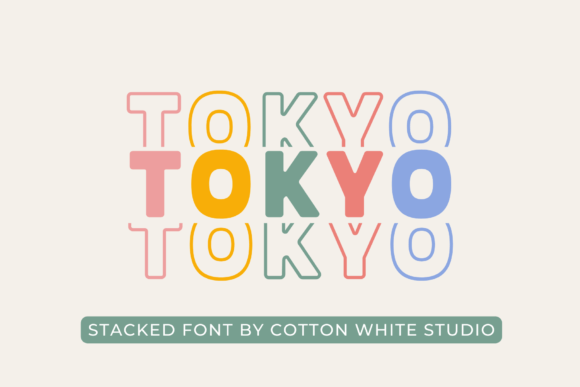
Tokyo Font: The Modern Choice for Bold, Clean Design
In the vast landscape of digital typography, finding a font that balances personality with professionalism can be a challenge. Many designers default to overused classics or struggle to find something fresh that doesn't compromise readability. Enter the Tokyo font, a typeface that has been gaining traction for its distinctive blend of minimalist aesthetics and impactful presence. It's not just another geometric sans-serif; it's a tool designed for clarity and sophistication in our visually saturated world.
Understanding the Essence of Tokyo
At its core, the Tokyo typeface is a study in modern simplicity. It belongs to the family of sans-serif fonts, characterized by the absence of decorative strokes at the ends of letters. What sets it apart is its deliberate construction. The letterforms are built with clean, precise lines and a geometric underpinning, giving each character a sense of stability and order. This isn't a font that shouts; it speaks with confident, measured authority. Its design philosophy prioritizes function, ensuring that every letter is instantly recognizable, whether viewed on a high-resolution screen or printed on textured paper.
A key characteristic is its consistent stroke width. While not a monoline font, the variation between thick and thin strokes is subtle and controlled. This creates a harmonious texture when used in blocks of text and prevents the "blotchy" appearance some display fonts can have at smaller sizes. The glowing letter effect mentioned in its description isn't a literal neon aura, but rather a metaphorical quality. It refers to the font's inherent legibility and the slight optical illusion created by its balanced proportions, making text feel open and easy to parse, almost as if it's illuminated against its background.
Where Tokyo Truly Shines: Practical Applications
The true test of any typeface is its utility. Tokyo's strengths are best demonstrated in specific, real-world scenarios where its traits solve common design problems.
Commanding Attention in Headlines and Titles
This is Tokyo's primary domain. Its bold weight is engineered for maximum impact. Use it for website hero sections, article titles, presentation slides, and social media graphics. The clean lines ensure that even at large sizes, the text remains crisp and doesn't develop visual noise. For a startup's landing page, a Tokyo headline can convey innovation and clarity. For a corporate report, it adds a layer of modern professionalism without sacrificing seriousness.
Building a Cohesive Brand Identity
Brands seeking a minimalist, tech-forward, or sophisticated aesthetic find a strong ally in Tokyo. It works exceptionally well for logos, wordmarks, and packaging where the name itself needs to be the focal point. Think of a boutique architecture firm, a premium skincare line, or a software-as-a-service (SaaS) company. Tokyo provides the visual foundation for a brand that values precision and contemporary style. Its neutrality allows it to pair effectively with more expressive serif fonts for body copy or with vibrant color palettes without clashing.
Enhancing Digital Interfaces and User Experience
In the realm of UI/UX design, readability is paramount. Tokyo's clean letterforms and ample spacing contribute to a comfortable reading experience on screens. It's an excellent choice for buttons, navigation menus, and short instructional text where quick comprehension is key. The font's inherent clarity can reduce cognitive load for users, making an interface feel more intuitive. For mobile apps, where screen real estate is limited, Tokyo's efficient use of space is a significant advantage.
Creating Impactful Print and Editorial Layouts
While digital is a natural habitat, Tokyo translates beautifully to print. Consider its use in magazine mastheads, book covers for non-fiction or contemporary fiction, and poster designs for events. Its minimalist nature allows it to complement, rather than compete with, powerful imagery. For an educational publisher, a Tokyo heading can make a textbook chapter feel more approachable and modern. For a freelancer's portfolio, it can present project titles with understated confidence.
The Strategic Benefits of Choosing Tokyo
Adopting Tokyo goes beyond mere aesthetics; it's a strategic decision with tangible benefits.
- Enhanced Clarity and Communication: The primary benefit is unambiguous communication. In a world of fleeting attention, Tokyo ensures your message is understood at a glance. This is crucial for calls to action, key data points, and essential information.
- Timeless Professionalism: Unlike trendy fonts that can date a design quickly, Tokyo's minimalist foundation gives it staying power. It feels current without being a fad, protecting your investment in a brand or design system.
- Versatile Sophistication: It walks the line between being distinctive and versatile. It can feel corporate in one context and avant-garde in another, depending on the surrounding design elements. This adaptability makes it a valuable asset in a designer's toolkit.
- Improved Workflow: For professionals, a reliable, well-designed font simplifies decision-making. Knowing that Tokyo will perform consistently across headlines and short text blocks streamlines the design process.
Practical Considerations for Implementation
Before integrating Tokyo into your next project, a few practicalities are worth noting.
Weight and Style Selection: Most font families offer a range of weights. For headlines, the Bold or Black weights are ideal. For subheadings or short UI elements, the Regular or Medium weights provide excellent clarity. Test different weights to see which achieves the desired visual hierarchy in your specific layout.
Pairing with Other Fonts: Tokyo's neutrality makes it a superb partner. For body text, consider pairing it with a highly readable serif like Merriweather or Lora to create a classic contrast. For a fully modern stack, a clean sans-serif like Inter or Open Sans for paragraphs can maintain a cohesive, contemporary feel. The key is to ensure sufficient contrast in structure or scale to guide the reader's eye.
Licensing and Technical Specs: Always verify the font's license. Is it free for commercial use, or does it require a purchase? Ensure you have the correct license for your project's scope. Additionally, check file formats (e.g., OTF, TTF, WOFF2) for web and application use to guarantee compatibility and performance.
Context is King: While versatile, Tokyo is not a universal solution. It may not convey the whimsical, hand-crafted, or ornate feelings required for certain projects like children's books or vintage-inspired branding. Evaluate if its minimalist, modern character aligns with the core message and emotional tone you need to establish.
In conclusion, the Tokyo font presents a compelling solution for designers and creators who value clarity, modern aesthetics, and impactful communication. Its strength lies not in flamboyance but in its disciplined, clean execution. By understanding its characteristics and applying it thoughtfully to headlines, branding, and interfaces, you can leverage its sophisticated minimalism to create designs that are both visually striking and supremely functional. It’s a typeface that doesn’t just display words; it elevates them.