Lovely Home: Integrating a Heartwarming Cursive Font into Your Design Process
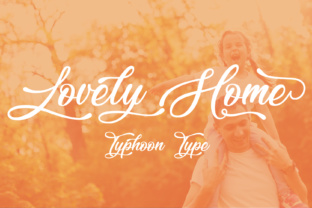
In the world of design, typography is more than just a vehicle for words; it is a crucial element of tone, personality, and user experience. While sans-serifs often dominate for their clarity, and serifs for their tradition, cursive fonts hold a unique power to evoke emotion. Lovely Home, a heartwarming cursive font, serves a specific and vital role in the designer's toolkit. It is designed to impart a warm, inviting, and luxurious yet relatable feel to a wide array of projects. Understanding how to implement this font effectively within a professional workflow requires more than just installing a file; it requires a strategic approach to visual communication.
Defining the Role of Lovely Home in Visual Strategy
Before integrating any asset into a project, it is essential to define its function. Lovely Home is not a utility font intended for body text or dense data presentation. Instead, it functions as a display or accent typeface. Its primary purpose is to capture attention and set an emotional context immediately. In a broader design strategy, this font fits into the "personality layer" of a project. When planning a visual identity, designers often start with a grid and layout structure (usually utilizing neutral fonts) and then layer in expressive typography to create a specific mood.
The "heartwarming" quality of Lovely Home makes it particularly effective for projects where trust and intimacy are required. For example, in the early stages of brand development for a small business, a decision must be made regarding how approachable the brand should appear. If the goal is to bridge the gap between luxury and accessibility, this cursive font offers a viable solution. It avoids the stiffness of corporate typography while maintaining a level of elegance that suggests quality. This makes it a strategic asset for entrepreneurs and creators looking to humanize their digital or print presence.
Practical Implementation in Print and Digital Workflows
Integrating a specialized font like Lovely Home requires consideration of the medium. The font is noted for its exceptional performance in print projects, but its application in digital environments requires careful testing. When working within a design software environment—such as Adobe Creative Suite or Affinity Designer—the workflow for implementing this font involves several key steps to ensure quality control.
Preparation and Asset Management
Efficiency in design relies on organization. Upon acquiring Lovely Home, the first step in the workflow is proper font management. Rather than installing every available weight or style system-wide, which can slow down performance, professionals often use font management software to activate the font only when the specific project requires it. This ensures that the operating system remains uncluttered and that the font is readily available for the specific task at hand.
Application in Print Media
For print workflows, such as creating wedding invitations, stationery, or product packaging, Lovely Home excels due to its cursive flow. However, cursive fonts require specific handling regarding kerning (the spacing between characters). In the execution phase, a designer must manually inspect the tracking. Because cursive letters connect, poor spacing can break the illusion of a handwritten flow, making the text look disjointed. A practical tip for print implementation is to convert the text to outlines (vector paths) before sending the file to the printer. This ensures that the typography renders exactly as intended, regardless of the printer’s installed fonts, safeguarding the quality of the final output.
Digital Integration and Responsiveness
When using Lovely Home for web design or social media graphics, responsiveness is a key factor. Cursive scripts can become illegible at small sizes on low-resolution screens. Therefore, this font should be reserved for headings, hero text, or call-to-action buttons where it can be displayed at a larger scale. In the planning stage of a website build, a developer or designer should establish a hierarchy where Lovely Home is used for high-impact emotional touchpoints, while a clean sans-serif handles the functional navigation and body copy. This combination ensures that the site remains usable while still benefiting from the font's inviting aesthetic.
Compatibility and Pairing Strategies
No font exists in a vacuum. The effectiveness of Lovely Home is significantly influenced by what it is paired with. In the decision-making process of layout design, contrast is the guiding principle. Because Lovely Home is ornate, flowing, and complex, it pairs best with clean, geometric sans-serif fonts. Fonts like Montserrat, Roboto, or Lato provide a neutral background that allows the cursive script to stand out without competing for attention.
For example, a freelance designer creating a brand kit for a bakery might use Lovely Home for the logo and the header "Our Story," but switch to a simple serif or sans-serif for the menu items. This interaction between tools ensures that the design is both beautiful and functional. If the designer were to use Lovely Home for the entire menu, the cognitive load on the customer would be too high, resulting in a poor user experience. Thus, the integration of this font is about balance—using it to highlight, not to overwhelm.
Use Cases Across Industries
The versatility of Lovely Home allows it to be adapted across various professional sectors. Understanding these use cases helps creators and business owners select the right asset for their specific goals.
- Publishing and Editorial: For bloggers and publishers, Lovely Home can be used for pull quotes or article titles in lifestyle, travel, or parenting niches. It adds a personal touch that makes the content feel like a letter from a friend rather than a sterile report.
- Marketing and Advertising: Marketers can utilize the font in email headers or social media call-outs to create a sense of urgency or exclusivity. Phrases like "Special Offer" or "Handcrafted for You" gain weight when rendered in a heartwarming cursive style.
- Education and Personal Projects: Educators creating certificates or hobbyists scrapbooking will find that Lovely Home adds a celebratory quality to achievements and memories. It transforms a standard document into a keepsake.
Long-Term Use and Brand Consistency
For small business owners and entrepreneurs, consistency is the bedrock of brand recognition. Once Lovely Home is selected as part of a brand identity, it must be used consistently across all touchpoints to build familiarity. This involves creating a style guide that dictates exactly where and how the font should be used. For instance, the guide might specify that Lovely Home is exclusively for the primary tagline and social media headers, but never for legal disclaimers or technical specifications.
Over time, this consistent implementation helps the audience associate the warm, luxurious feel of the font with the brand itself. It becomes a visual shorthand for the brand's values. However, long-term use also requires periodic review. As design trends evolve, the way a font is presented may need to change, even if the font itself remains the same. Perhaps the color palette changes, or the spacing is adjusted for modern aesthetics, but the core asset—Lovely Home—remains a constant thread in the visual narrative.
Optimizing Efficiency in the Creative Process
Finally, integrating Lovely Home smoothly into a routine involves thinking about workflow efficiency. Designers and creators often deal with tight deadlines. Having a reliable font that performs well without extensive tweaking is a significant time-saver. While manual kerning is always recommended for display text, Lovely Home is designed with OpenType features that can automate some of the stylistic connections, allowing for a faster turnaround time.
By treating typography as a functional component of the workflow rather than just a decorative afterthought, professionals can leverage Lovely Home to produce high-quality work that resonates emotionally with their audience. It is a tool that, when used with intention and skill, bridges the gap between a technical design and a heartfelt message.