Honest Mistake: Embracing the Raw Grit of Hand-Drawn Typography
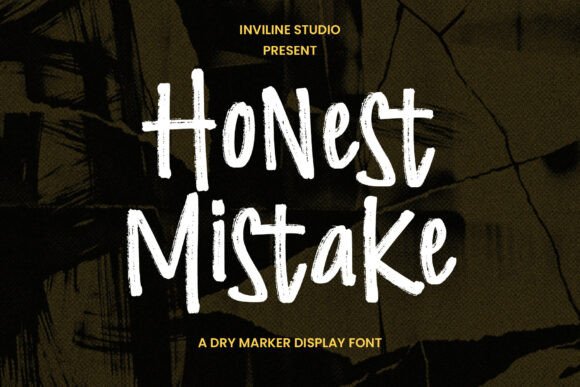
In a digital landscape saturated with sleek, polished vectors and geometric perfection, there is a growing hunger for something real—something that feels touched by human hands. This is exactly where Honest Mistake enters the conversation. It is not just a font; it is a dry marker display typeface that celebrates the beauty of imperfection. Designed to mimic the tactile experience of a thick marker teetering on the edge of running out of ink, this typeface resonates with a grainy, textured aesthetic that brings a visceral weight to every letterform.
However, while the appeal of Honest Mistake is immediate for anyone working in street fashion, skate deck design, or urban gastronomy branding, utilizing it effectively requires more than just a simple drag-and-drop. Many designers, eager to capture that "edgy punk gig poster" look, often stumble when integrating such a distinct typeface into their work. If you want to leverage the rawness of Honest Mistake without compromising legibility or professional standards, you need to understand the common pitfalls associated with textured display fonts and how to navigate them.
The Allure of Authenticity vs. The Trap of Overuse
The primary draw of Honest Mistake is its deliberate textural inconsistency. The unbalanced boundaries and rhythmic blend of uppercase and lowercase characters give each word its own visual gravity. This is incredibly useful for grabbing attention. However, a frequent mistake among beginners and even seasoned marketers is the urge to apply this font everywhere. Because it carries such a strong personality, using it for body copy or long-form descriptions is a recipe for disaster. The very grainy texture that looks stunning in a headline becomes visually exhausting when applied to a full paragraph, reducing readability and frustrating the user.
Think of this typeface like a spice. In the right amount, it enhances the flavor of the dish; too much, and it ruins the meal. For example, if you are designing a label for an artisanal beverage, you might use Honest Mistake for the brand name or the flavor descriptor. But for the ingredients list or the nutritional facts, you absolutely need a clean, sans-serif companion font. This contrast not only ensures the necessary information is legible but also makes the textured elements pop even more by comparison.
Ignoring the OpenType Features: Leaving Value on the Table
One of the most overlooked aspects of Honest Mistake is its technical capability. It is equipped with OpenType alternates and ligatures, features that allow for advanced customization. A common error is installing the font and simply typing without exploring these options. When you type "Honest Mistake" in a standard word processor without enabling these features, you might get a repetitive look where identical letters (like the two 's's in "Mistake") look exactly the same. In hand-lettering, repetition is the enemy of authenticity.
To avoid this, you must use design software that supports OpenType features, such as Adobe Illustrator, InDesign, or Affinity Designer. By accessing the Glyphs panel, you can swap out standard characters for stylistic alternates. This allows you to create compositions that ring with true hand-drawn originality. For instance, if you are creating a logo for a skate shop, using alternate ligatures can connect letters in a way that mimics natural handwriting flow, ensuring the design feels bespoke rather than generated.
Context Matters: Matching the Font to the Message
While Honest Mistake is versatile within its niche, it is not a universal solution. It was crafted with eclectic city-life and creative buzz in mind. It thrives in environments associated with urban culture, art, and casual rebellion. A significant error occurs when designers attempt to force this aesthetic into corporate or formal environments. Using Honest Mistake for a law firm’s website or a luxury financial report would send conflicting signals. The rough-and-tumble aesthetic, while charming, undermines the trust and stability required in those sectors.
Before making a decision, evaluate your target audience. If you are targeting a demographic that values grit, authenticity, and street culture, this font is a perfect fit. If you are targeting a conservative audience looking for reliability and tradition, you should look elsewhere. The "charm lies in its rawness," but that rawness must be relevant to the message. For example, an album cover for an indie rock band is a prime candidate for Honest Mistake, whereas a wedding invitation is not.
Technical Oversights: Resolution and Scalability
Because Honest Mistake relies on a grainy texture to simulate a dry marker, it behaves differently than standard vector fonts at various sizes. A mistake often seen in digital applications is using the font at very small sizes on low-resolution screens. The intricate details of the texture can become muddy or disappear entirely, making the text look like a rendering error rather than a design choice.
Conversely, when scaling up for large format printing, such as on a banner or a storefront window, you must ensure your source file is high quality. While the font is digital, the visual effect is analog. Always test your mockups at the actual output size. If the texture becomes too dominant or creates visual noise that competes with your imagery, you may need to increase the tracking (letter-spacing) to give the characters room to breathe. This simple adjustment can significantly improve legibility while maintaining the font's edgy vibe.
Final Advice for the Modern Creator
Honest Mistake is more than just a typeface; it is a statement of identity. It rejects the sterile perfection of modern vector design in favor of something that feels lived-in and authentic. To use it effectively, you must respect its character.
- Don't overdo it: Reserve it for headlines and display text to maximize impact.
- Pair wisely: Combine it with a clean, neutral font to ensure your message is understood.
- Utilize the tech: Enable OpenType features to prevent repetitive letterforms and enhance the hand-drawn feel.
- Check the context: Ensure the gritty aesthetic aligns with your brand's values and audience expectations.
By avoiding these common mistakes, you can harness the full potential of this typeface, creating designs that are not only visually striking but also functionally sound. Whether you are working on a global street art project or a local brewery label, Honest Mistake