Cowgirl: A Bold Western Display Font for Authentic Designs
In the vast landscape of typography, finding a typeface that genuinely captures a specific era or aesthetic without feeling like a parody can be a challenge. The Cowgirl font represents a deliberate move towards authenticity in the "Western" category. It is not merely a standard serif with slightly skewed angles; it is a display typeface engineered to evoke the rugged, adventurous spirit of the Old West. For designers, marketers, and creatives working on projects that require a distinct Americana vibe, understanding the technical and aesthetic nuances of Cowgirl is essential for successful implementation.
Understanding the Aesthetic and Utility of Cowgirl
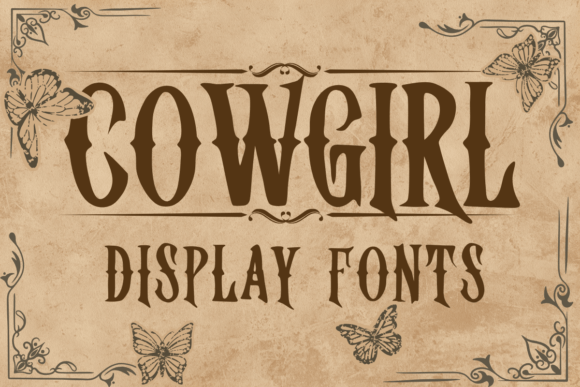
The primary utility of Cowgirl lies in its classification as a bold display font. In typography, display faces are designed specifically for headlines, titles, and short bursts of text rather than long-form body copy. Cowgirl excels in this arena due to its thick, high-impact letterforms. The visual weight of the characters ensures legibility even at smaller sizes or when overlaid on complex backgrounds, such as textured landscapes or vintage photography.
The design philosophy behind Cowgirl draws heavily from 19th-century wood type and saloon signage. However, it modernizes these influences by refining the curves and serifs to ensure they render cleanly on modern digital screens. This balance between historical reference and digital optimization is what gives the font its practical value. It avoids the "grungy" look that often makes vintage-style fonts unusable in professional contexts, offering instead a clean, vector-friendly aesthetic that scales perfectly for both print and web applications.
Key Characteristics and Design Elements
When evaluating the specific traits of Cowgirl, several design elements stand out that contribute to its overall effectiveness:
- Thick Stroke Weight: The font features heavy, uniform strokes that create a solid presence on the page. This density is crucial for establishing a strong visual hierarchy, instantly drawing the viewer's eye to the headline.
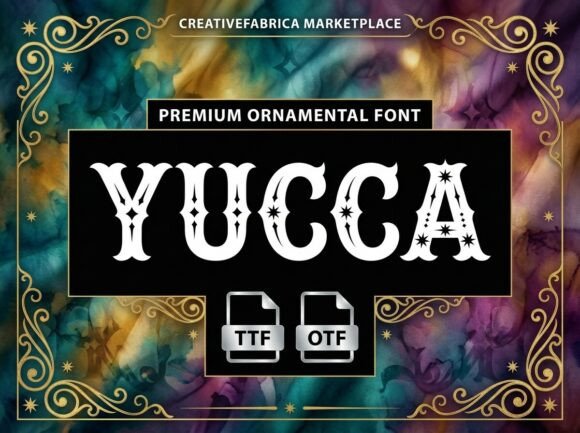
- Western Serifs: The serif treatment is distinctly Western, often featuring bracketed or decorative terminals that mimic the hand-carved details of historical woodblocks. These details add character without sacrificing structural integrity.
- Geometric Stability: Despite its decorative nature, Cowgirl maintains a geometric foundation. The letters sit firmly on the baseline with consistent x-heights, ensuring that words formed by the font are easy to read quickly.
- Rustic Texture: The font conveys a tactile quality. Even in a flat digital format, it suggests the roughness of leather, wood, or metal, which helps in setting an atmospheric tone for a project.
Real-World Application and Performance
The true test of any typeface is how it performs in practical scenarios. Cowgirl is versatile enough to handle a variety of design contexts, provided it is used within its intended scope. Its strongest performance is seen in branding and event promotion where a specific theme needs to be communicated immediately.
For instance, in the context of logo design, Cowgirl provides a solid foundation for businesses in the food and beverage industry, particularly barbecue restaurants, breweries, or distilleries. The font's boldness ensures the brand name remains visible on signage and packaging. Similarly, for event organizers planning rodeos, country music festivals, or themed parties, Cowgirl serves as a reliable tool for creating posters and tickets that resonate with the target audience.
However, it is important to observe the font's limitations. Because Cowgirl is a display typeface, it is ill-suited for body text. Attempting to use it for paragraphs or descriptions would result in "rivers" of white space and eye strain for the reader. Professional workflow dictates that Cowgirl should be paired with a neutral, highly legible sans-serif or serif font for supporting copy. For example, pairing Cowgirl with a clean font like Roboto or Open Sans can create a balanced contrast that highlights the headline while keeping the message accessible.
Who Benefits Most from Using Cowgirl?
The utility of Cowgirl extends across several professional sectors, though it is most relevant to specific user groups:
- Graphic Designers and Creatives: Professionals working on branding kits for clients in the outdoor, adventure, or hospitality sectors will find Cowgirl to be a valuable asset. It solves the recurring problem of finding a Western font that doesn't look cheap or cartoonish.
- Small Business Owners: Entrepreneurs in niche markets—such as artisanal goods, equestrian equipment, or vintage clothing—can use Cowgirl to inject personality into their visual identity without hiring a custom letterer.
- Marketers and Content Creators: For social media managers creating promotional graphics for sales or events, Cowgirl offers a way to break through the noise. Its distinctive style stops the scroll, making it effective for digital advertising.
- Educators and Publishers: While less common, educational materials covering American history or literature can benefit from the font to create engaging chapter titles or cover designs that transport the reader to the era being discussed.
Evaluating Quality, Flexibility, and Long-Term Value
From a technical standpoint, the quality of a font is determined by its vector paths and kerning pairs. Cowgirl generally performs well in this regard, offering smooth curves that do not pixelate when scaled to large dimensions for signage or banners. The kerning—the spacing between individual letters—is typically pre-adjusted to handle common letter combinations, reducing the manual adjustment time required by the designer.
Flexibility is another critical factor. While the theme is specific, the font's structural integrity allows it to be adapted for different moods. By altering the color palette and accompanying graphics, Cowgirl can feel "rugged and dusty" for a vintage theme or "bold and modern" for a contemporary streetwear brand. This adaptability increases its long-term value in a designer's toolkit, as it can be repurposed for multiple clients or projects without feeling repetitive.
Reliability also plays a role in the decision-making process. A font must be stable across different operating systems and design software. Cowgirl is typically distributed in standard formats (such as OTF or TTF) that ensure compatibility with industry-standard tools like Adobe Creative Cloud, Canva, and Figma. This cross-platform reliability ensures that the creative workflow is not interrupted by technical glitches.
Practical Recommendations for Implementation
To maximize the effectiveness of Cowgirl, consider the following professional recommendations:
- Maintain Hierarchy: Use Cowgirl exclusively for H1 or H2 headings. Do not use it for navigation menus or footer text, as the visual complexity can clutter small interface elements.
- Manage Tracking: Because the letters are bold and ornate, they may appear crowded at smaller sizes. Increasing the tracking (letter-spacing) slightly can improve legibility and give the text a more open, airy feel.
- Color and Contrast: Cowgirl works best with high-contrast color schemes. Dark text on a light background or vice versa ensures that the decorative details of the serifs are visible and impactful.
- Contextual Pairing: Avoid pairing Cowgirl with other decorative fonts. The visual competition will confuse the viewer. Stick to simple, geometric sans-serifs for body copy to let the display font shine.
Conclusion: Is Cowgirl the Right Choice?
Ultimately, Cowgirl is a specialized tool designed for a specific job. It is not a "do-it-all" typeface, nor was it intended to be. Its value lies in its ability to instantly communicate a sense of adventure, history, and boldness. For professionals who need to evoke the spirit of the West with authenticity and style, Cowgirl offers a reliable, high-quality solution. By understanding its strengths and respecting its limitations, designers can leverage this font to create compelling visuals that resonate with their audience and stand the test of time.