Bigland Retro: A Font for Urban Logotype Style
Finding the right typeface can often feel like searching for a missing puzzle piece. You might have the perfect color palette and a solid layout, but if the letters don’t match the vibe, the entire project falls flat. When a design calls for something that feels established, energetic, and distinctly urban, standard default fonts rarely cut it. This is where specialized typefaces come into play, specifically those designed to mimic the art of hand-lettering and vintage signage. One such typeface that bridges the gap between nostalgic charm and modern utility is Bigland Retro.
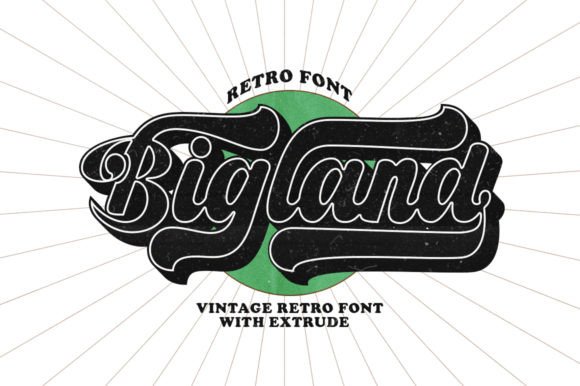
Bigland Retro is not just another collection of characters; it is an urban retro font crafted to emulate the bold, flowing style of classic logotype lettering. If you look at the branding of a vintage barbershop, a hip streetwear brand, or a neighborhood coffee roaster, you will likely see this style of typography. It features the thick strokes and dynamic curves characteristic of sign painting from the mid-20th century, yet it retains a sharpness that works well on high-definition digital screens. For anyone involved in visual creation—whether you are a freelance graphic designer, a small business owner, or a hobbyist scrapbooker—understanding how to leverage a font like this can significantly elevate your work.
Understanding the Aesthetic: What is Urban Retro?
To appreciate what Bigland Retro brings to the table, it helps to understand the "urban retro" aesthetic. This style is heavily influenced by the hand-lettering seen on shop windows, taxi cabs, and posters from the 1950s through the 1970s. It is characterized by a sense of movement and personality that mechanical typefaces often lack. Unlike a standard serif or sans-serif font, a logotype font like Bigland Retro is designed to look as though it was custom-drawn for a specific brand.
The visual impact is immediate. It conveys confidence and heritage. When you use Bigland Retro, you are borrowing the visual language of established craftsmanship. However, it is important to note that this style is quite specific. It is bold and expressive, making it ideal for headers, logos, and merchandise. It is generally less suited for long-form body text, where readability at smaller sizes is the priority. For a blogger, this might mean using it for post titles and social media graphics, but switching to a cleaner font for the actual article text.
The Technical Advantage: PUA Encoding and Ease of Use
One of the most significant barriers for non-designers when using decorative fonts is accessibility. Often, you download a font only to find that the "fancy" swashes and tails are hidden behind complex keyboard shortcuts or are only accessible through advanced design software. This is where Bigland Retro solves a major pain point for beginners and professionals alike.
The font is PUA encoded, which stands for Private Use Areas. In simple terms, this means that all of the extra glyphs, stylistic alternates, and decorative swashes are fully accessible. You do not need to be an expert in Adobe Illustrator to use them.
- For Beginners and Hobbyists: If you are using basic software like Canva, PicMonkey, or even Microsoft Word to design a flyer or a personal project, PUA encoding is a lifesaver. You can simply copy and paste the specific letter variation you want from a character map directly into your document. This levels the playing field, allowing someone with zero coding or design training to create professional-looking logotypes.
- For Professionals and Freelancers: Even for those fluent in the Adobe Creative Suite, PUA encoding speeds up the workflow. Instead of hunting through OpenType features panels, you can quickly grab the glyph you need. This efficiency is crucial when working on tight deadlines for clients.
Practical Applications Across Different Fields
The versatility of a logotype font depends on the context of its user. Bigland Retro is designed to be "added confidently to your projects," but the nature of those projects varies wildly depending on who you are. Here is how different groups might approach this font.
Entrepreneurs and Small Business Owners
For a business owner, branding is everything. If you are launching a new product—perhaps a craft brewery, a food truck, or a boutique clothing line—you need a logo that communicates your identity instantly. Hiring a calligrapher for custom lettering can be expensive. A font like Bigland Retro offers a high-quality, cost-effective alternative. It allows you to create a distinct mark for your packaging, menus, or storefront window without starting from scratch. The "retro" feel suggests reliability and tradition, which can be a subconscious trust signal to consumers.
Marketers and Content Creators
In the world of digital marketing, standing out in a crowded feed is the primary goal. Marketers often use bold typography to stop the scroll. Bigland Retro is excellent for creating "hero" images—those large, attention-grabbing graphics at the top of a blog post or a YouTube thumbnail. Because the font has a strong personality, it can convey a mood (such as excitement, nostalgia, or edginess) more effectively than a generic bold font. For a content creator, this means less time explaining the vibe of a video and more time letting the visuals do the talking.
Educators and Publishers
While a retro font might seem out of place in a formal academic textbook, educators often create materials for younger audiences or extracurricular activities. A teacher designing a poster for a school fair, a history project on the 1960s, or a sports team logo would find Bigland Retro very useful. It adds a layer of fun and engagement that standard academic fonts lack. Similarly, indie publishers working on book covers for fiction—particularly genres like noir, mystery, or coming-of-age stories—can use this font to set the scene before the reader even turns the first page.
Evaluating the Font: Priorities and Trade-offs
When deciding whether to integrate Bigland Retro into your toolkit, it is helpful to weigh your specific priorities.
- Creativity vs. Uniformity: If your project requires strict uniformity and neutrality (like a corporate financial report), this font is likely the wrong choice. However, if your priority is creativity and injecting "soul" into a design, Bigland Retro excels. The swashes and ligatures allow for a custom look that feels hand-crafted.
- Speed and Reliability: Because the font is PUA encoded and designed as a logotype, it is reliable for quick turnarounds. You don't need to spend hours kerning (adjusting the space between letters) manually, as the font is pre-designed to flow naturally in a logo context.
- Long-term Usefulness: Trends come and go, but the "urban retro" style has proven to be surprisingly durable. It taps into a nostalgia that cycles back into fashion regularly. Investing time in learning how to use a font like this is a safe bet for a designer's long-term asset library.
Matching the Font to Your Goals
Ultimately, the decision to use Bigland Retro comes down to identifying the gap between your current resources and your desired outcome. If you are a freelancer trying to offer "brand identity" packages to clients, having a diverse library of high-quality display fonts allows you to present multiple concepts quickly. If you are a hobbyist making birthday cards for friends, this font adds a professional polish that store-bought cards can't match.
The key is to test the font within your specific workflow. Because it is designed to be accessible, you can try pairing it with different elements. Try it with a gritty texture overlay for a vintage poster look, or pair it with a clean, thin sans-serif font for a modern contrast. The "logotype lettering" style of Bigland Retro is bold enough to stand on its own, but it also plays well with others when balanced correctly.
In conclusion, Bigland Retro offers a specific solution to a common design challenge: how to achieve a professional, hand-lettered look without the time or expense of custom calligraphy. Its urban retro style fits a wide range of applications, from business branding to personal art projects. By ensuring the font is PUA encoded, the developers have removed the technical barriers that often frustrate beginners, making it a tool that truly invites you to add it confidently to your work. Whether you are designing a logo for a startup or creating a header for a blog, this font provides the visual weight and character needed to make an impact.