Mirid: Unleashing the Occult's Power in Your Design Work
Finding a typeface that truly embodies a dark, aggressive aesthetic can be a frustrating quest. Many designers and creators settle for generic "spooky" fonts that lack genuine character, leading to projects that feel uninspired or, worse, comical. If you're working on an extreme metal logo, a horror game title, or an edgy streetwear brand, you need more than just a font; you need a weapon. This is where Mirid enters the scene—a formidable gothic typeface built to capture a shadow-bound-and-sharp soul, offering a solution for those who demand authenticity and impact.
Understanding Mirid's Core Identity
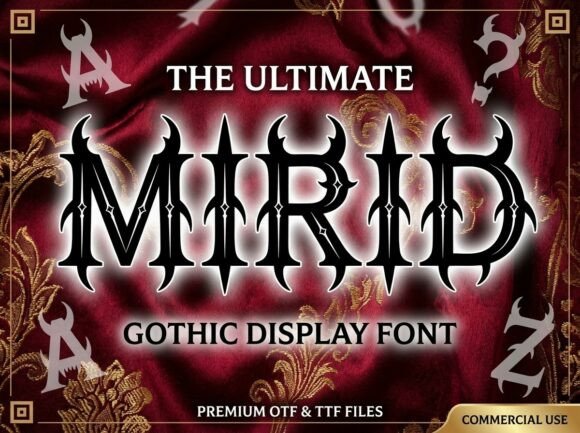
Mirid is not your typical decorative font. Its design is characterized by aggressive, high-contrast letterforms. The most distinctive features are its rhythmic, hand-drawn demon-horn terminals and serrated, dagger-like edges. These elements are not random; they are meticulously crafted to bridge the gap between ancient forbidden sigils and modern dark fantasy branding. The font carries a heavy structural weight and a rebellious personality, making it a premier choice for projects that need to communicate power, danger, and the occult.
Common applications include:
- Extreme Metal Band Logos: Capturing the raw energy of genres like black metal or death metal.
- Independent Horror Gaming Titles: Creating immersive and unsettling typography for game interfaces and marketing.
- Alternative Streetwear Identities: Designing bold graphics for apparel that stands out in a crowded market.
- High-Impact Social Media Headers: Crafting visuals that stop the scroll and demand attention in digital spaces.
Avoiding Common Pitfalls When Using Mirid
The power of a typeface like Mirid comes with responsibility. Its very strength—its intense, detailed character—can become a weakness if used incorrectly. Understanding these potential missteps is key to harnessing its full potential and ensuring your final product is effective, not just elaborate.
Mistake 1: Overlooking Readability for Aesthetic Impact
A frequent error is prioritizing the font's striking look over its primary function: communication. The serrated edges and complex terminals, while visually stunning, can reduce legibility, especially at small sizes or in long blocks of text. This can frustrate users, making your game menu confusing or your band's name unreadable on a festival poster.
The Better Approach: Use Mirid strategically. Reserve it for headlines, logos, and short, impactful statements. For body text or essential information, pair it with a highly legible sans-serif or serif font. Always test your design at the intended size and in the intended medium—a social media header viewed on a phone screen behaves differently than a vinyl album cover held in hand.
Mistake 2: Misjudging the Context and Audience
Not every project benefits from a dark, occult aesthetic. Applying Mirid to a children's book, a wellness brand, or a corporate report would create a jarring disconnect. This mistake stems from a focus on personal preference rather than project goals and audience expectations, potentially alienating the very people you aim to reach.
The Better Approach: Before selecting any font, define your project's core message and target audience. Does "shadow-bound," "aggressive," and "forbidden" align with your brand's values? For a horror game, absolutely. For a family restaurant, no. Conduct a simple audience analysis or refer to your brand guidelines to ensure the typeface's personality is a genuine fit.
Mistake 3: Ignoring Technical and Licensing Details
Overlooking the technical specifications of a font can lead to significant problems down the line. This includes not checking the available character set (does it support the languages you need?), the file formats (WOFF2 for web, OTF/TFF for print), and, crucially, the licensing terms. Using a font without the proper license for commercial work can result in legal issues and unexpected costs.
The Better Approach: Always review the font's documentation before purchasing or downloading. Verify the license covers your intended use (e.g., desktop, web, app, merchandise). Check the character map for essential glyphs and symbols. If you're a freelancer or agency, ensure the license allows for client work. This due diligence prevents legal headaches and ensures the font performs technically across all your applications.
Integrating Mirid Effectively into Your Workflow
Once you've decided Mirid is the right tool, a thoughtful integration process will elevate your work. Start by studying the font's personality in detail. Look at how the demon-horn terminals flow and how the serrated edges create rhythm. Use these features to reinforce your design's narrative, not just as decoration.
Consider the visual hierarchy. Mirid commands attention, so let it. Use it for the most critical element, like a band name or game title, and allow supporting text to recede with a calmer typeface. Pay close attention to kerning and spacing; the complex shapes of Mirid often require manual adjustment to achieve balanced, professional typography.
Finally, seek inspiration from successful uses in the wild. Analyze how respected metal bands or acclaimed indie game developers use similar gothic typefaces. Notice how they balance intensity with clarity, and how the font interacts with other design elements like imagery and color palettes. This research will help you avoid clichés and develop a more sophisticated application.
Choosing a typeface like Mirid